
Fire Extinguisher Inspection Process: Complete Guide for 2026
- north10049769
- Feb 15
- 8 min read
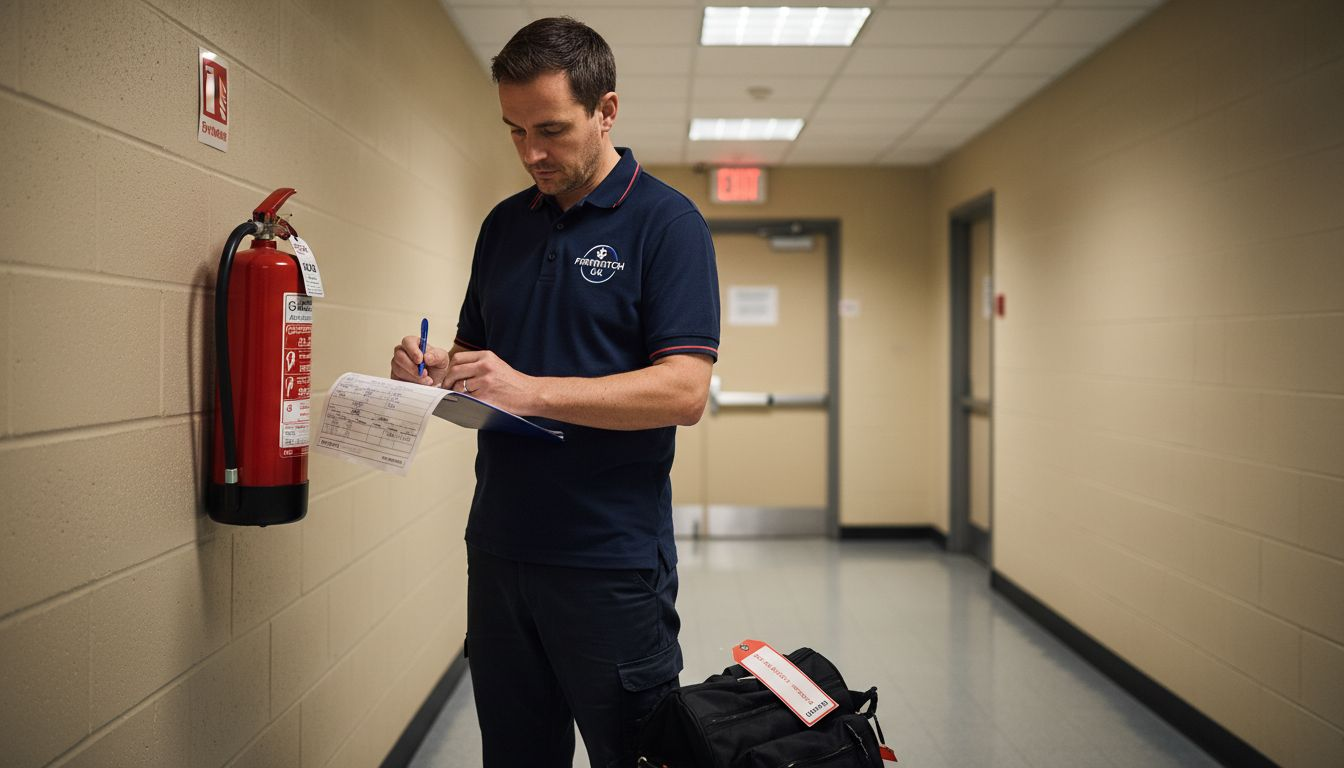
Fire extinguisher inspections can feel like a maze of paperwork, equipment, and standards for facility managers who oversee safety in Greater Manchester. Staying on top of each step is vital, not just to meet British legal standards, but to ensure occupants in your building are genuinely protected if an emergency strikes. This guide breaks down the essential inspection checklist, clear mapping, and robust record-keeping methods you need to simplify compliance and reduce your fire safety risks.
Table of Contents
Quick Summary
Key Insight | Explanation |
1. Gather Essential Inspection Tools | Prepare checklists, gauges, and record systems to ensure a thorough assessment of fire extinguishers. |
2. Map Extinguisher Locations | Create a detailed site map to identify every extinguisher’s position and ensure they are easily accessible and visible. |
3. Conduct Detailed Physical Inspections | Regularly check each extinguisher’s condition and accessibility to guarantee they are operational and free from obstruction. |
4. Record Inspection Results Meticulously | Document every inspection finding rigorously to maintain safety standards and ensure compliance with regulations. |
5. Verify Compliance with Safety Regulations | Regularly review inspection practices against current standards to mitigate legal risks and uphold workplace safety. |
Step 1: Prepare inspection tools and documentation
Before diving into your fire extinguisher inspection, gathering the right tools and documentation is critical to ensuring a thorough and compliant assessment. Think of this stage as your preparation phase - similar to a pilot running through pre-flight checks, you’ll want every essential item ready and organised.
Your inspection toolkit should include several key elements that enable a comprehensive review. Comprehensive inspection guidelines recommend having the following items prepared:
Inspection checklist with standardised evaluation criteria
Pressure gauge for measuring extinguisher pressure levels
Dry cleaning cloths for wiping down equipment
Inspection tags for documenting current status
Digital or paper record-keeping system
Torch or flashlight for detailed visual examinations
Accurate documentation serves multiple purposes beyond mere bureaucracy. By maintaining precise records, you’re not just ticking boxes - you’re creating an audit trail that demonstrates your commitment to workplace safety and meets regulatory requirements. Fire safety documentation standards mandate comprehensive logging of each inspection, including location details, physical condition assessments, and any maintenance recommendations.
Expert advice: Always keep a spare set of inspection forms and a backup digital storage method to prevent potential record-keeping gaps during your safety assessments.
Step 2: Identify and access all extinguishers on site
Locating and ensuring clear access to every fire extinguisher on your premises is a fundamental safety requirement that can make the difference between a controlled incident and a potential disaster. Your goal is to create a comprehensive site-wide extinguisher mapping that leaves no area uncovered.
Systematic inspection techniques help facility managers develop a robust approach to identifying and verifying extinguisher locations. Start by creating a detailed site map that marks the exact position of each fire extinguisher, paying special attention to:
High-risk areas like kitchens, electrical rooms, and storage spaces
Corridors and common walkways
Near potential fire hazards
Emergency exit routes
Working spaces with electrical equipment
During your mapping process, you’ll want to verify not just location, but accessibility and visibility. Each extinguisher must be:
Clearly visible and unobstructed
Mounted at the correct height (typically 1-1.5 metres from floor)
Easily reachable without moving furniture or equipment
Marked with clear signage
Free from potential blockages
An obstructed fire extinguisher is as good as no fire extinguisher at all.
Expert tip: Create a digital backup of your extinguisher location map and store physical copies in multiple accessible locations to ensure quick reference during emergencies.
Step 3: Examine physical condition and accessibility
Evaluating the physical integrity and accessibility of fire extinguishers is a critical step in ensuring their reliability during an emergency. Your thorough inspection will determine whether each unit is fit for immediate use and positioned for quick deployment.
Monthly visual inspection techniques require a comprehensive assessment of multiple physical attributes. You’ll want to methodically examine each extinguisher for potential issues:
External body condition for dents, corrosion, or damage
Pressure gauge reading and functionality
Safety pin and seal integrity
Hose and nozzle for cracks or blockages
Mounting bracket stability and condition
Label legibility and instructions visibility
During your inspection, pay particular attention to accessibility criteria. Each extinguisher must be:
Mounted at correct height (1-1.5 metres from floor)
Clearly visible from multiple angles
Free from obstructions within a 1-metre radius
Unblocked by furniture, equipment, or stored items
Positioned near potential fire risk areas
A damaged or inaccessible fire extinguisher provides a false sense of security and could prove catastrophic during an actual emergency.
Carefully document any defects or accessibility issues you discover, as these will require immediate remedial action to maintain your site’s fire safety standards.
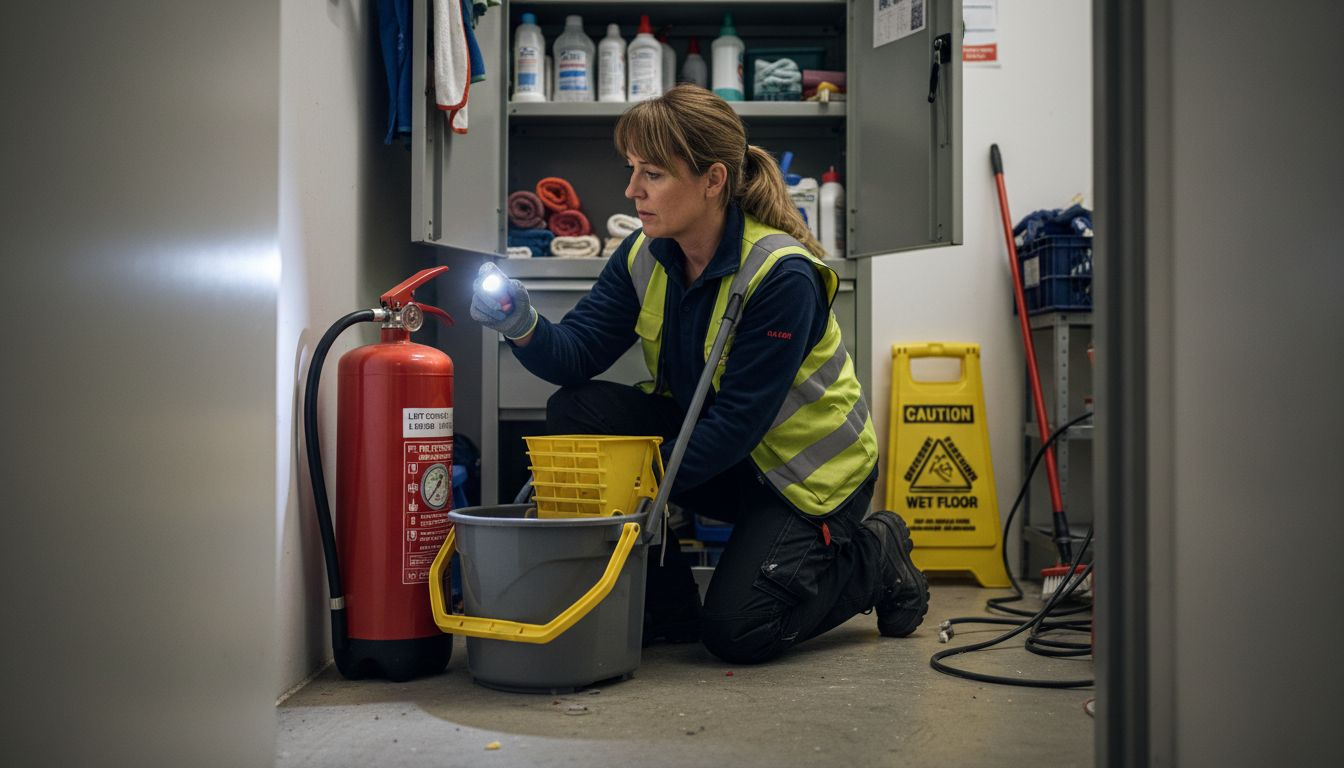
Expert tip: Take clear photographs of any identified issues to provide visual evidence and support for maintenance or replacement recommendations.
Step 4: Check pressure, seals, and labelling
Ensuring your fire extinguisher is fully operational and compliant requires a meticulous examination of its pressure, seals, and labelling. This crucial step determines whether your extinguisher is truly ready to perform in an emergency.
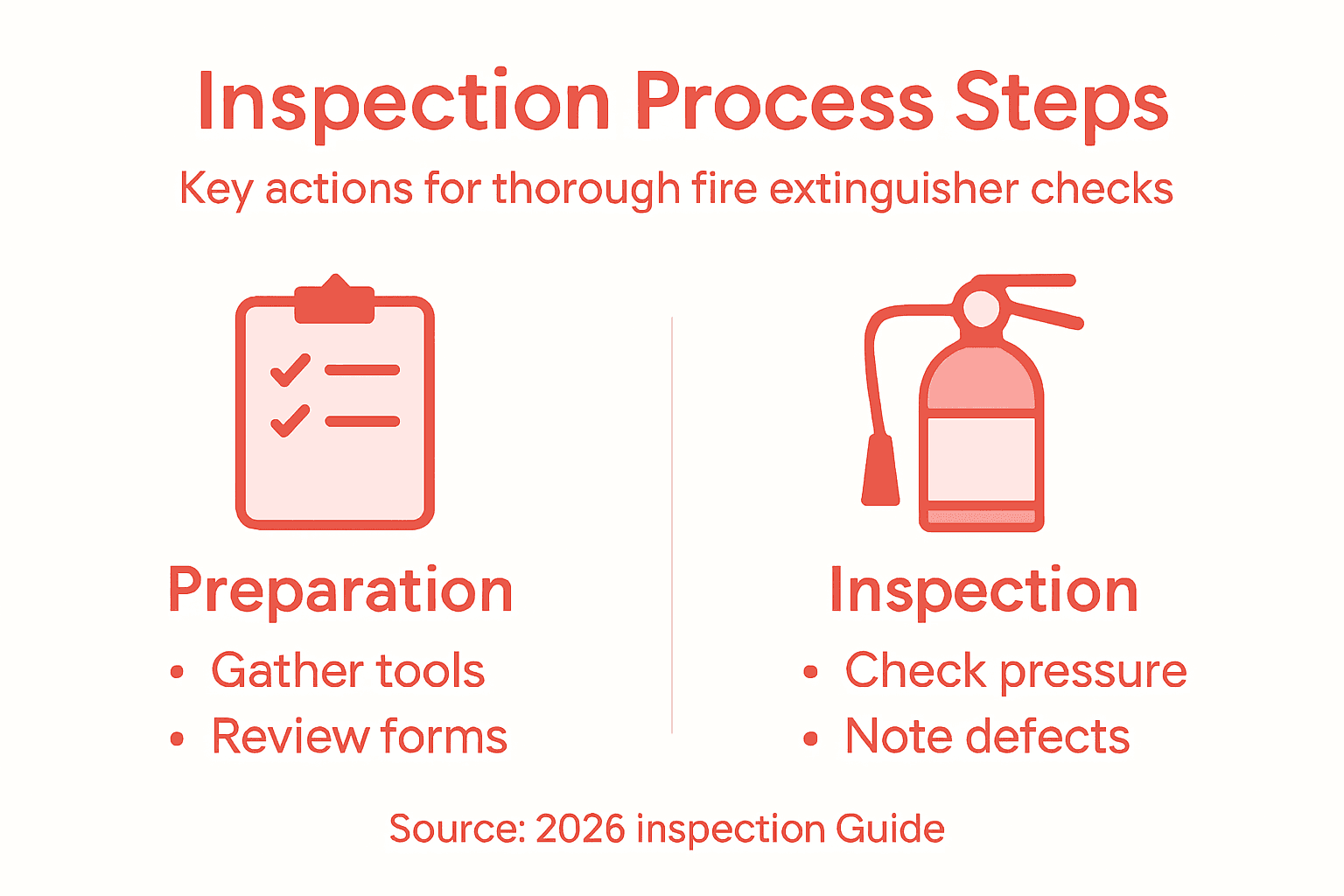
Fire extinguisher inspection protocols mandate a comprehensive review of three critical components. You’ll need to assess each element with precision and care:
Pressure Gauge Inspection:
Verify needle is within the green operational zone
Check for any signs of gauge damage
Confirm gauge is clearly readable
Seal and Security Check:
Inspect safety pin for intactness
Verify tamper seal is unbroken
Look for any signs of unauthorised removal
Labelling Verification:
Confirm instructions are completely legible
Check manufacturing and expiry dates
Ensure classification markings are clear
A compromised seal or unreadable label could render your fire extinguisher useless during a critical moment.
Documenting your findings becomes crucial for maintaining a robust safety record and demonstrating regulatory compliance.
Expert tip: Photograph the pressure gauge and labelling for your records, creating a visual baseline for future comparisons.
Step 5: Record inspection results and issues
Documenting your fire extinguisher inspection findings is more than just bureaucratic paperwork - it’s a critical step in maintaining safety standards and ensuring your organisation’s regulatory compliance. Your records serve as a comprehensive historical snapshot of each extinguisher’s condition and maintenance journey.
Fire extinguisher inspection logging requires meticulous attention to detail and systematic recording. Your documentation should capture the following essential elements:
Key Documentation Requirements:
Extinguisher location and unique identifier
Date and time of inspection
Inspector’s name and credentials
Pressure gauge reading
Physical condition assessment
Any identified defects or maintenance needs
Recommended actions
Ensure your documentation includes both digital and physical records:
Create an electronic spreadsheet or specialised inspection management software
Maintain physical inspection tags on each extinguisher
Take clear photographic evidence of any issues
Store backup copies in multiple secure locations
Incomplete or inconsistent record-keeping can invalidate your entire inspection process and potentially compromise workplace safety.
Regular and thorough documentation not only supports compliance but also helps track the lifecycle of your fire safety equipment.
Expert tip: Develop a standardised template with predefined fields to ensure consistency and reduce human error during record-keeping.
Step 6: Verify compliance with regulations
Ensuring your fire extinguisher inspection meets all regulatory requirements is not just a legal obligation - it’s a fundamental aspect of workplace safety. Your thorough review must align with current national and international safety standards.
Global fire safety compliance standards require meticulous attention to multiple regulatory dimensions. Your verification process should cover these critical areas:
Key Compliance Checkpoints:
Inspection frequency matching regulatory requirements
Proper documentation and record-keeping
Adherence to British Standards (BS specifications)
Maintenance and servicing protocols
Staff training and competency verification
Correct extinguisher selection for specific environments
Detailed Verification Steps:
Review current British Standard requirements
Cross-reference your inspection records
Validate inspector qualifications
Check equipment certification dates
Assess maintenance history
Confirm staff training records
Non-compliance is not just a regulatory risk - it can potentially invalidate your entire fire safety infrastructure.
Regulatory compliance is an ongoing process that requires consistent monitoring and proactive management of your fire safety systems.
Reference table: Key standards and where they apply in fire extinguisher inspections.
Regulatory Area | Standard/Requirement | Significance |
Inspection Frequency | BS 5306-3, local legislation | Ensures regular checks are performed |
Documentation | British Standards, HSE guidelines | Supports compliance and audits |
Training | Staff competence certifications | Ensures correct inspection practices |
Maintenance Protocols | Manufacturer/BS requirements | Maintains extinguisher effectiveness |
Here’s a summary comparing key inspection steps and their main objectives:
Step | Focus Area | Main Objective |
Preparation | Tools & documentation | Ensure readiness for inspection |
Identification | Extinguisher location & access | Guarantee full site coverage |
Physical Examination | Condition & accessibility | Confirm usability in emergencies |
Operational Testing | Pressure, seals, labelling | Validate compliance and readiness |
Documentation | Recording findings | Maintain accurate, auditable records |
Compliance Verification | Regulations and standards | Meet legal and safety requirements |
Expert tip: Create a digital compliance checklist that automatically flags upcoming regulatory requirements and potential gaps in your fire safety protocols.
Ensure Your Fire Extinguisher Inspections Meet Every Safety Standard Today
Navigating the detailed fire extinguisher inspection process as outlined in the 2026 guide can be challenging. From preparing comprehensive documentation to verifying pressure seals and meeting British Standard regulations, the risk of missed steps or incomplete records is real and could put your workplace safety at risk. Key pain points like maintaining thorough record-keeping, ensuring extinguisher accessibility, and confirming compliance require expert handling to avoid costly penalties and ensure peace of mind.
Abbott Fire Protection is your trusted partner in Greater Manchester and surrounding areas to overcome these challenges. We offer professional fire extinguisher inspections aligned with the latest safety standards alongside expert advice on maintaining full regulatory compliance. We also provide complementary services including fire alarms and emergency lighting to give your premises complete fire protection coverage.
Don’t wait until an emergency exposes gaps in your fire safety strategy. Contact us now at Abbott Fire Protection to schedule your thorough fire extinguisher inspection. Discover how our expert assessments can help you stay fully compliant and ready with detailed reports and ongoing support. Protect your business, your people, and your peace of mind today. Learn more about our fire safety solutions and take the first step towards a safer workplace.
Frequently Asked Questions
What tools do I need for a fire extinguisher inspection?
You will need an inspection checklist, pressure gauge, dry cleaning cloths, inspection tags, and a record-keeping system. Gather these tools before starting your inspection to ensure a thorough and compliant assessment.
How often should I conduct fire extinguisher inspections?
Fire extinguishers should be inspected monthly to maintain compliance and ensure they are ready for use. Schedule these inspections regularly to avoid any lapses in safety oversight.
What should I look for during a physical examination of fire extinguishers?
Check for the external body’s condition, the pressure gauge reading, and the integrity of seals and labels. Assess each extinguisher thoroughly to confirm it is operational before a potential emergency.
How do I document the inspection results?
Record the location, date of inspection, pressure gauge reading, and any identified issues with each extinguisher. Maintain both digital and physical records to ensure an accurate audit trail and compliance with safety standards.
What compliance regulations should I verify during inspections?
Ensure your inspections align with national standards, including inspection frequency and proper documentation. Regularly review and update your processes to meet evolving regulations and maintain safety in your workplace.
What are the penalties for non-compliance with fire extinguisher regulations?
Non-compliance can result in legal penalties, increased liability, and potential fines. Maintain consistent documentation and regular inspections to avoid these risks and ensure a safe environment.
Recommended
Comments